
What is Orca?
Orca is a visual geolocation AI that can look at a photo and estimate where it was taken—at city scale.
The name reflects what it is: precise, intelligent, and ocean-inspired. We built Orca around a few core priorities: ease of use with minimal setup, portability across modest hardware, practical accuracy without requiring massive compute, and city-first reasoning optimized for dense urban environments.
Think of it as geolocation AI that fits into your everyday workflow—whether you're a student, developer, journalist, researcher, or just someone trying to make sense of the world visually.
Why city scale matters
A lot of geolocation systems are designed either for planet-level guesses—continent, country, climate band—or for narrow, hyper-local use cases with heavy data requirements. Cities are different.
Cities compress architecture, infrastructure, zoning, signage, vegetation, road design, and cultural patterns into a tight space. Two cities in the same country can look wildly different. Two neighborhoods in the same city can look like they belong on different continents.
Orca answers not just “what country is this,” but “what kind of city environment is this.”
Who Orca is for
Orca is meant to be a general-purpose tool. Here are a few of the audiences we designed it for.
Students and educators
Explore geography through images, build assignments around local environments, or study urban design patterns across regions.
Developers and builders
Plug geolocation into apps without needing a full GIS engineering team. Orca is API-first, modular, and easy to extend.
Researchers and analysts
Triage large image sets to find likely cities or city types before deeper analysis.
Journalists and investigators
Validate locations from public imagery with transparent supporting evidence.
Everyday users
Sometimes you just want to know where a photo was taken. Normal use is a primary use.
How Orca works
Orca is built around a simple pipeline that stays powerful without getting heavy.
What makes Orca different
Built for the real world, not just benchmarks
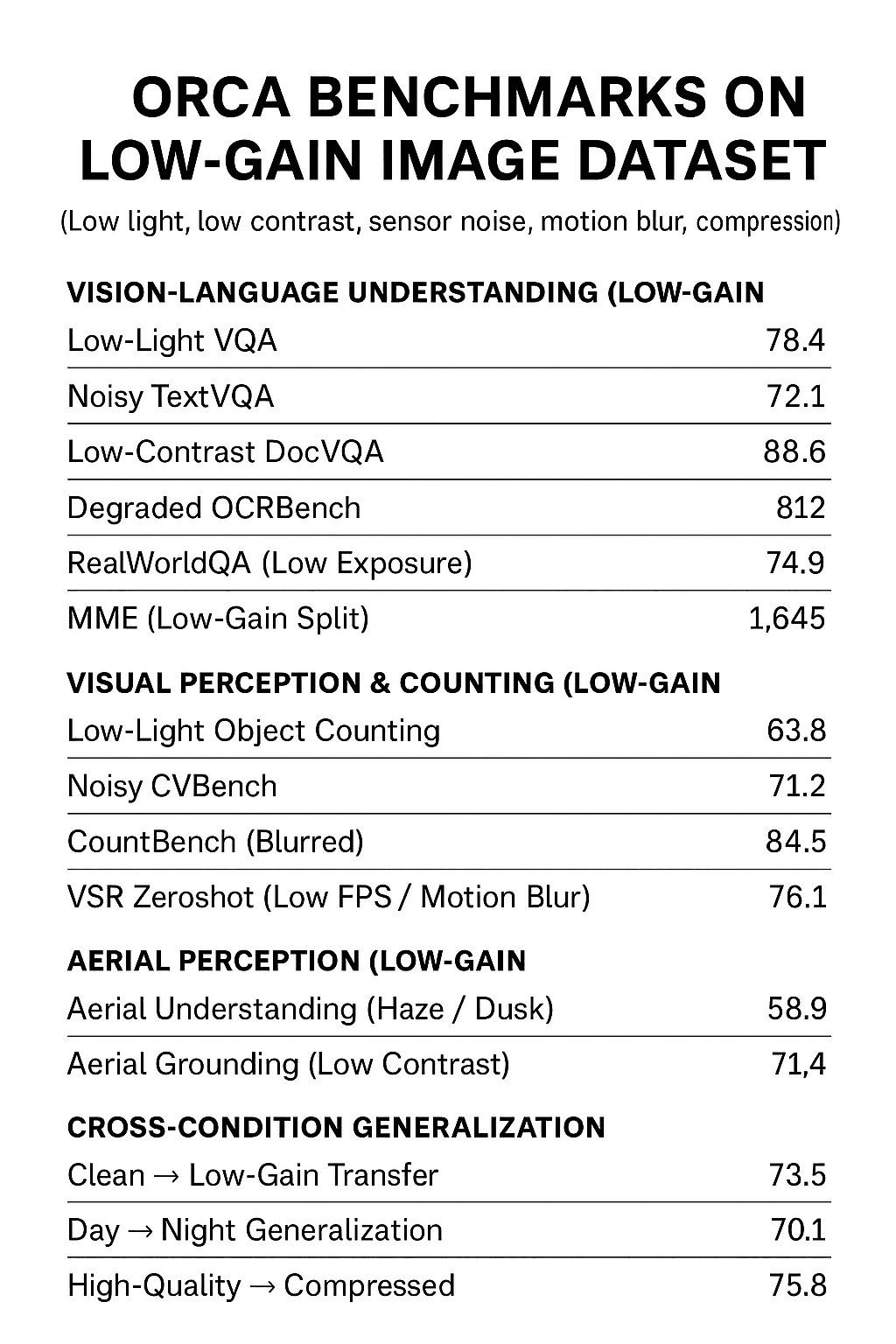
Datasets are curated to include messy street-level reality: construction zones, occlusions, low-quality frames, weather variance.
Global city generalization
Training is structured so the model doesn't overfit to a single city's grammar. Cross-city training is what makes it scale.
Lightweight by design
Orca is meant to be runnable on modest compute. You shouldn't need a server farm to locate a street.
Human-transparent output
Geolocation is high-stakes in some contexts. The system shows reasoning signals, not just a black-box answer.
To be clear: Orca is not a global, planet-wide generalist. It's purpose-built for cities. That specialization is why it can stay small and fast.
What comes next
Orca is not a frozen product. It's a moving system with clear near-term priorities: more European coverage, better cross-city similarity search, an improved reasoning head, and community-friendly tooling.
The core ambition is simple: if you can take a photo, you should be able to get a usable geolocation answer.
Orca is geolocation AI that's not reserved for specialists. It's built for cities, built to generalize globally, and built to be used.
Miami was the training ground. Europe is the first major expansion. The rest of the world's cities are the destination.
— oceanir.ai