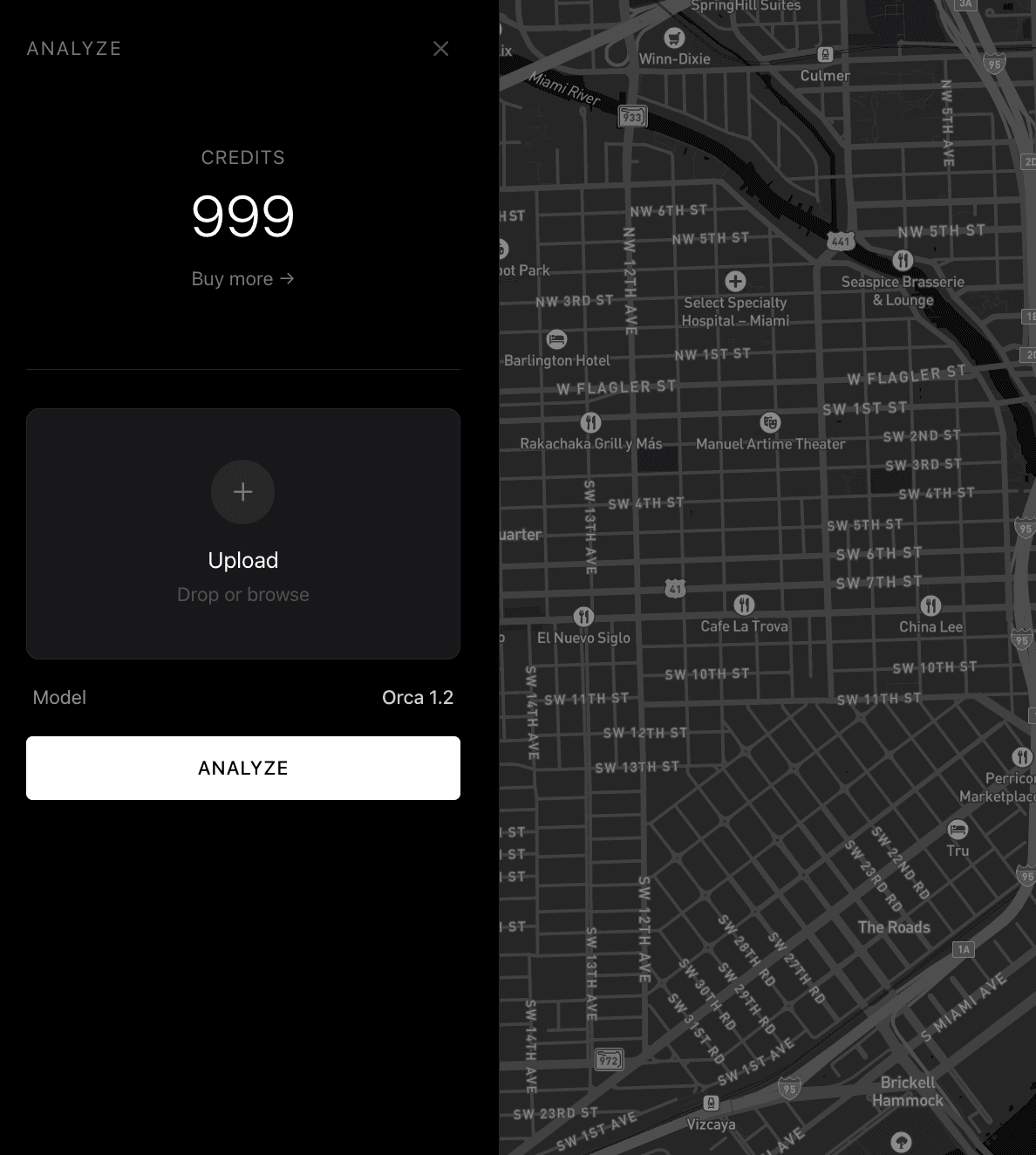
“We focus on cities that unlock the most value for users, prioritize regions where visual diversity teaches the model the most.”
We'd love to expand coverage faster and wider, but we're operating within real constraints—budget, compute, data access, team bandwidth. That means our expansion has to be surgical and strategic.
This is the part that matters: the roadmap from here. Not the flashy launch, not the metrics—the actual work of making Orca 1.2 better, broader, and more useful over time.
What's next
The immediate priorities are clear: more cities, better reasoning, and cleaner tooling.
Expanding coverage
Right now, Orca 1.2 is strong in Miami and growing across Europe. The next phase is widening that map—more European metros, selected Asian cities, strategic coverage in Latin America and the Middle East.
Improving the reasoning head
The model can already identify cities and explain basic cues. The next step is making those explanations feel more natural—closer to how a human geoguesser would think through a scene.
Better developer experience
Clean APIs, good documentation, simple demos, plug-in modules that let developers extend the system without rewriting it.
Performance improvements
Orca 1.2 represents a significant leap forward from our initial release. Explore the interactive charts below to see how we've improved across accuracy, speed, and geographic coverage.
The challenges
Expanding coverage isn't just about adding more training data. Every new city introduces new edge cases, new architectural styles, new ways that visual cues can mislead the model.
Keeping the system lightweight while improving accuracy is a real tension. It's easy to make a model better by making it bigger. Harder to keep it small and still push performance forward.
And then there's generalization. How do you train a model that stays sharp on Miami streets while also learning to handle Tokyo alleys and Paris boulevards?
These aren't solved problems. They're the engineering work that comes next.
Closing
Orca 1.2 is not done. It's just starting. The goal isn't to build a perfect model—it's to build a useful one that keeps getting better.
More cities. Better reasoning. Cleaner tools. That's the roadmap.
We want everyone to be able to use geolocation AI like ours. This technology shouldn't be locked away—it should be accessible, usable, and built in the open.
If you're using Orca 1.2, building on it, or just watching to see where it goes—thank you for being part of this. The work continues.
— The OceanIR Team